The Future of Freelancing with AI: Trends to Watch

Emerging AI Technologies in Freelancing
The freelance industry is entering a new era. Artificial intelligence is no longer just a productivity tool used to write emails or generate content. It is transforming how freelancers discover clients, deliver projects, automate business operations, build digital products, and generate recurring revenue.
From AI agents and autonomous workflows to generative AI, intelligent automation, and multimodal AI, emerging technologies are creating opportunities for freelancers to compete in markets that were once dominated by large agencies and technology companies.
For freelancers in India and across the global marketplace, understanding these technologies early can create a significant competitive advantage.
1. Why emerging AI technologies matter for freelancers
Traditional freelancing often depends on exchanging time for money. A freelancer receives a project, completes the work manually, and gets paid for the hours or deliverables involved.
AI is changing this model.
Freelancers can now use intelligent systems to automate repetitive activities, accelerate project delivery, and offer sophisticated services without building large teams.
Key benefits include:
- Higher productivity: Complete repetitive tasks in significantly less time.
- New service opportunities: Offer AI consulting, automation, chatbot development, and AI integration.
- Lower operating costs: Reduce dependency on large teams and expensive software.
- Scalable delivery: Serve more clients using reusable AI-powered workflows.
- Recurring revenue: Build AI-powered SaaS products, subscriptions, and digital services.
The biggest opportunity is not simply using AI to work faster. It is learning how to solve business problems using AI.
2. Top emerging AI technologies transforming freelancing
2.1 Agentic AI and autonomous AI agents
Agentic AI is one of the most important developments in the AI ecosystem. Unlike traditional AI assistants that respond to individual prompts, AI agents can plan tasks, make decisions within defined boundaries, use external tools, and execute multi-step workflows.
Freelancing opportunities:
- Building AI-powered customer support agents.
- Automating lead qualification and sales follow-ups.
- Developing autonomous research assistants.
- Creating AI-powered recruitment workflows.
- Building intelligent business process automation systems.
Example: A freelancer can develop an AI sales assistant that captures website leads, qualifies prospects, updates a CRM, schedules meetings, and sends personalized follow-up messages.
Potential tools include LangGraph , CrewAI, n8n, and Microsoft Copilot Studio.
2.2 Generative AI and multimodal AI
Generative AI creates new content, including text, images, audio, video, and software code. Multimodal AI goes further by understanding and working across different types of information.
Freelancers can use these technologies to offer:
- AI-generated marketing content.
- Professional product photography and advertising creatives.
- Video production and editing.
- Presentation and pitch deck creation.
- Technical documentation.
- Multilingual content localization.
- Brand identity and creative design services.
Popular platforms include ChatGPT, Google Gemini, Adobe Firefly, and Runway.
2.3 Retrieval-Augmented Generation (RAG)
RAG allows AI applications to retrieve relevant information from private documents, databases, and enterprise knowledge sources before generating responses.
This is particularly valuable for businesses that want AI assistants to work with their own information rather than relying exclusively on general-purpose AI knowledge.
Freelancers can build:
- Internal company knowledge assistants.
- AI-powered customer support platforms.
- Document search and summarization systems.
- Legal and compliance document assistants.
- HR policy assistants.
- Intelligent research platforms.
Technologies worth learning include LangChain, LlamaIndex, Pinecone, and pgvector.
2.4 AI-powered software development
AI-assisted development is changing how independent developers build and deliver software.
Developers can use AI coding assistants to understand existing codebases, generate application components, create tests, debug problems, and accelerate software delivery.
Emerging opportunities include:
- AI-powered web application development.
- Rapid MVP development for startups.
- API development and integration.
- Legacy application modernization.
- Automated testing and code reviews.
- Cloud infrastructure automation.
- AI-enabled SaaS application development.
Explore GitHub Copilot, Cursor, Claude Code, and Replit.
2.5 AI voice agents and conversational AI
Voice AI is creating opportunities to automate telephone-based customer interactions using natural language.
Businesses can deploy voice agents to handle incoming inquiries, appointment bookings, customer support, lead qualification, and routine business conversations.
Freelancers can offer:
- AI receptionist solutions.
- Automated appointment booking.
- Multilingual customer support.
- AI-powered outbound calling.
- Voice-enabled business assistants.
- Contact-center automation.
Platforms worth exploring include ElevenLabs, Vapi, and Retell AI.
2.6 No-code and low-code AI automation
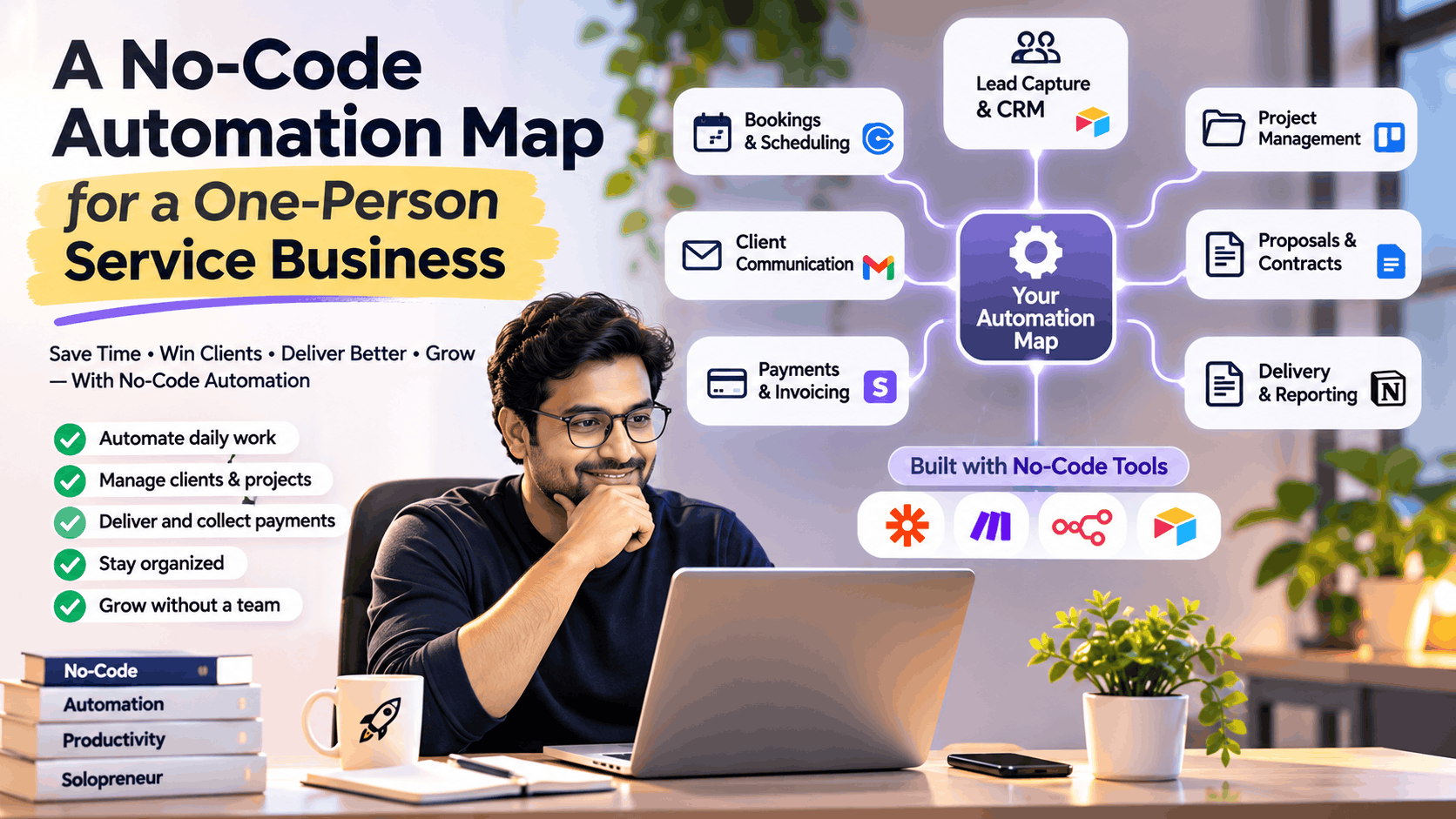
AI automation platforms allow freelancers to connect applications, automate business processes, and create intelligent workflows without developing every component from scratch.
Potential freelance services:
- Automated invoice processing.
- Email and CRM automation.
- WhatsApp business automation.
- Automated content publishing.
- E-commerce order processing.
- Customer onboarding workflows.
- AI-powered reporting and dashboards.
Popular tools include Make, Zapier, and n8n.
2.7 AI-powered data analytics and business intelligence
Businesses increasingly need to convert large volumes of data into meaningful business decisions.
AI-powered analytics makes it easier to analyze datasets, identify trends, detect anomalies, and generate business reports.
Freelancers can provide:
- Predictive analytics.
- Sales forecasting.
- Customer segmentation.
- Automated management reporting.
- Data visualization.
- Business performance dashboards.
- AI-driven decision support systems.
Relevant technologies include Microsoft Power BI, Tableau, Databricks, and Python-based machine learning frameworks.
3. Emerging AI freelance service opportunities
The following table highlights practical service categories and potential project pricing.
| AI service | Potential project pricing |
|---|---|
| AI workflow automation | $300–$2,000 |
| AI chatbot development | $500–$3,000 |
| RAG-based knowledge assistant | $1,000–$5,000 |
| AI voice agent development | $500–$3,000 |
| AI-powered SaaS MVP | $2,000–$10,000+ |
| AI data analytics dashboard | $500–$4,000 |
| AI content automation | $200–$1,500 |
| AI consulting and architecture | $500–$5,000+ |
Illustrative service pricing, not guaranteed earnings. Actual rates depend on scope, complexity, geography, experience, and client value.
4. Best AI technologies to learn in 2026
Rather than learning every available AI platform, freelancers should prioritize technologies that solve real customer problems.
| Technology | Learning priority | Business opportunity |
|---|---|---|
| Agentic AI | Very high | Autonomous workflows |
| Generative AI | Very high | Content and creative services |
| RAG and vector databases | Very high | Enterprise knowledge assistants |
| AI automation | Very high | Business process automation |
| AI-assisted development | High | Application development |
| Voice AI | High | Customer service automation |
| Predictive analytics | High | Business intelligence |
| Multimodal AI | High | Video, image, and audio services |
| AI security and governance | High | Enterprise AI consulting |
| Edge AI | Emerging | IoT and intelligent devices |
5. How freelancers can build an AI-powered business
Learning AI tools is only the first step. The real opportunity comes from packaging technical capabilities into services that businesses are willing to purchase.
Consider these five business models:
1. AI consulting services
Help small and medium-sized businesses identify automation opportunities, select AI platforms, and implement AI adoption strategies.
2. AI automation agency
Build reusable automation solutions for sales, marketing, finance, HR, and customer service.
3. AI-powered digital products
Create and sell:
- AI prompt libraries.
- Industry-specific AI templates.
- Business automation workflows.
- AI-powered reporting templates.
- Online courses and practical training.
4. Micro-SaaS products
Develop small subscription-based software products addressing specific business problems, such as AI invoice processing, recruitment screening, or automated content publishing.
5. AI implementation and integration
Help businesses integrate AI into their existing systems, databases, websites, CRM platforms, and enterprise applications.
6. Where to find AI freelance clients
Freelancers should build a presence across multiple channels rather than depending on one marketplace.
| Platform | Best opportunity |
|---|---|
| Upwork | AI development and consulting |
| Fiverr | Productized AI services |
| Freelancer.com | Software and automation projects |
| Enterprise consulting and direct clients | |
| Toptal | Premium technology projects |
| Contra | Independent creative and technology work |
| PeoplePerHour | Small business projects |
Practical recommendation: Build a portfolio demonstrating three to five real AI solutions. A working demonstration usually communicates your value better than a long list of AI certifications.
7. A practical 30-day roadmap to start earning with AI
Here is a structured roadmap for freelancers who want to enter the AI services market.
30-day AI freelancing launch plan
- Days 1–7: Choose your specialization
- Learn one or two AI technology stacks.
- Identify a profitable customer problem.
- Select your target industry.
- Define three service offerings.
- Days 8–14: Build your portfolio
- Create an AI chatbot demonstration.
- Develop an automated business workflow.
- Build an AI-powered reporting solution.
- Document the business value of each solution.
- Days 15–21: Launch your freelance presence
- Optimize LinkedIn and freelance profiles.
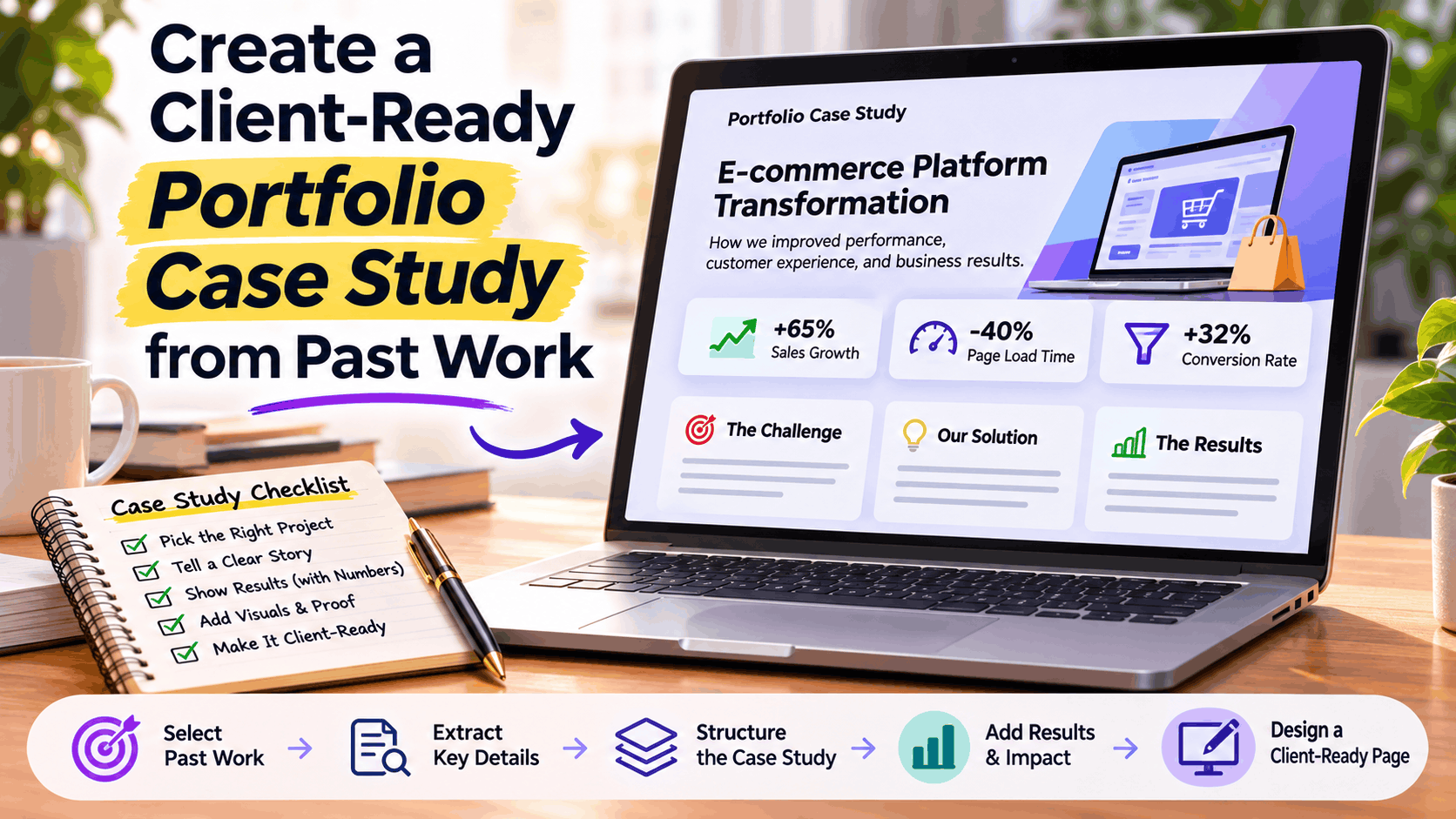
- Publish your portfolio and case studies.
- Create service packages and pricing.
- Contact prospective clients.
- Days 22–30: Acquire your first clients
- Send personalized proposals.
- Conduct discovery calls.
- Offer a clearly scoped pilot project.
- Collect testimonials and referrals.
- Convert successful projects into recurring engagements.
8. Challenges and risks of AI freelancing
Despite the opportunities, AI freelancing comes with challenges that professionals must understand.
| Challenge | Recommended approach |
|---|---|
| Increasing competition | Specialize in industry-specific solutions |
| AI-generated inaccuracies | Introduce human validation |
| Data privacy concerns | Use secure platforms and appropriate access controls |
| Changing AI platforms | Continuously upgrade technical skills |
| Pricing pressure | Sell measurable business outcomes |
| Client trust | Demonstrate working solutions and case studies |
| Vendor dependency | Design flexible, maintainable architectures |
Freelancers should also understand intellectual property, confidentiality, licensing, and applicable data protection requirements before deploying AI solutions for clients.
9. The future of freelancing: From individual contributor to AI-powered entrepreneur
The traditional freelancer sells individual skills. The next generation of freelancers will increasingly sell intelligent solutions, automated processes, and measurable business outcomes.
Consider the evolution:
| Traditional freelancing | AI-powered freelancing |
|---|---|
| Manual content writing | AI-assisted content systems |
| Manual data entry | Intelligent document processing |
| Traditional customer support | Autonomous AI agents |
| Manual reporting | AI-powered analytics |
| Individual software development | AI-assisted product engineering |
| Hourly consulting | Productized AI consulting |
| One-time projects | Subscription-based services |
This transformation does not mean human expertise is becoming irrelevant. Instead, experience, creativity, problem-solving, communication, and domain knowledge become even more valuable.
The strongest freelancers will combine human judgment with AI capabilities.
10. Final thoughts
Emerging AI technologies are creating one of the biggest opportunities for independent professionals in the modern digital economy.
Agentic AI, generative AI, RAG, voice AI, multimodal systems, and intelligent automation are opening new markets for freelancers who understand how to apply these technologies to real business challenges.
For professionals starting their AI freelancing journey, the best strategy is straightforward:
- Select a specific business problem.
- Master the technologies required to solve it.
- Build practical demonstrations.
- Package your expertise into clearly defined services.
- Build relationships with potential clients.
- Gradually transition from one-time projects to recurring revenue models.
The future does not belong to freelancers who know how to use AI tools. It belongs to those who can turn AI into valuable business solutions. Key Trends Impacting Freelancers