How to Write a Client Proposal with AI Without Sounding Generic

How to Write a Client Proposal with AI Without Sounding Generic
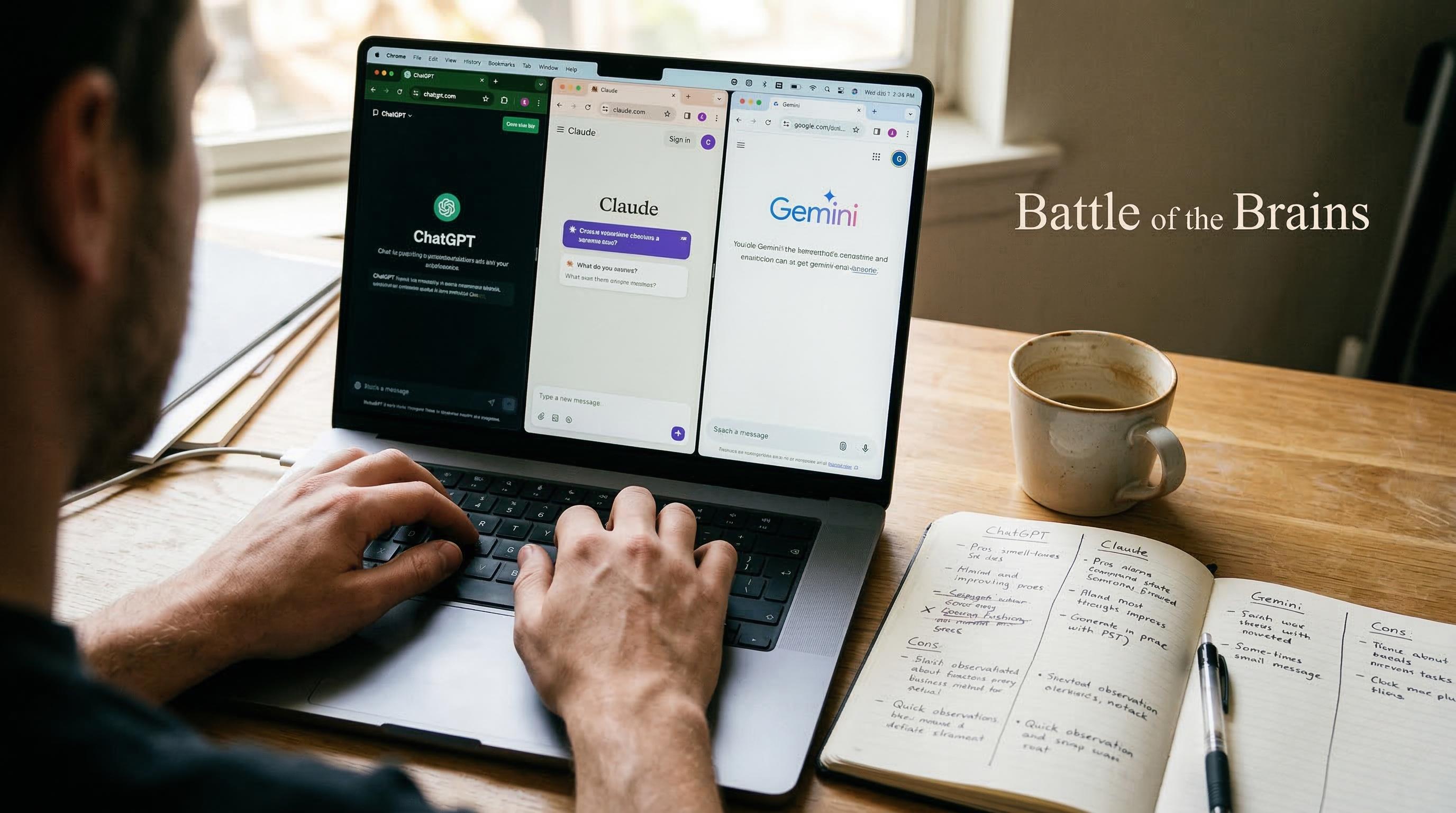
Artificial intelligence has made writing business proposals faster than ever. With tools like ChatGPT, Claude, and Gemini, freelancers, consultants, agencies, and business owners can generate professional-looking proposals in minutes.
But there is a problem.
Many AI-generated proposals sound almost identical.
They contain polished introductions, impressive-sounding business language, generic recommendations, and lengthy descriptions of services. Yet they often fail to communicate the one thing a prospective client really wants to know:
Why should I choose you to solve my specific problem?
A client proposal is not simply a document explaining what you offer. It is a business argument demonstrating that you understand the client’s challenges, have a credible approach, and can deliver measurable value.
AI can help you create that argument. However, the difference between an average proposal and a winning proposal comes from how you use it.
In this guide, you will learn how to use AI to create personalized, persuasive, and professional client proposals without losing your individual voice or expertise.
1. Why Most AI-Generated Proposals Sound Generic
AI tools are trained to recognize patterns and generate relevant language. When given a broad instruction such as:
“Write a professional proposal for a digital marketing service.”
The result is usually a well-structured but predictable document.
It might include:
- An introduction about delivering innovative digital marketing solutions.
- A list of services such as SEO, social media, and content marketing.
- A generic implementation methodology.
- A timeline and pricing section.
- A conclusion expressing enthusiasm about working together.
Nothing is necessarily incorrect. However, the proposal could be sent to hundreds of different businesses without changing much.
That is the problem.
A strong proposal should reflect the client’s industry, business model, current challenges, priorities, budget considerations, and expected outcomes.
The golden rule: Never ask AI to write a proposal before giving it enough information to understand the client.
2. Start with Client Research, Not Proposal Writing
Before generating any content, build a clear picture of the prospective client.
AI becomes much more useful when it works with real business context rather than assumptions.
Collect the following information:
Business information
- Company name and industry.
- Products or services.
- Target customers.
- Business size and operating model.
- Geographic markets.
Client requirements
- The problem they want to solve.
- Current operational or technical challenges.
- Expected deliverables.
- Project deadlines.
- Budget expectations, if available.
Business objectives
- Revenue growth.
- Cost reduction.
- Operational efficiency.
- Customer experience improvement.
- Digital transformation.
- Competitive differentiation.
You can gather this information from discovery calls, meeting notes, requirement documents, questionnaires, company websites, and publicly available business information.
Example: Turning a generic requirement into a specific opportunity
Imagine a logistics company approaches you for an AI-powered delivery optimization solution.
A generic interpretation would be:
“The client needs an AI-powered logistics platform.”
A deeper interpretation could be:
“The client is experiencing rising last-mile delivery costs, inconsistent delivery estimates, limited fleet visibility, and inefficient route planning across multiple cities. The proposed solution should improve delivery predictability, optimize fleet utilization, and reduce operational costs.”
The second interpretation creates a much stronger foundation for a proposal.
3. Use AI as a Business Analyst Before Using It as a Writer
One of the biggest mistakes is asking AI to immediately generate a complete proposal.
Instead, use AI in stages.
First, ask it to analyze the client’s requirements and identify the underlying business problems.
Then ask it to identify potential solutions, dependencies, risks, assumptions, and measurable outcomes.
Finally, use the analysis to create the proposal.
Practical AI prompt: Client requirement analysis
Copy and customize this prompt:
“Act as a senior business consultant and solution architect.
Analyze the following client requirements.
Your responsibilities:
- Identify the client’s primary business objectives.
- Identify explicit and implicit business challenges.
- Separate business requirements from technical requirements.
- Identify gaps, ambiguities, and assumptions.
- Recommend potential solutions.
- Identify measurable business outcomes.
- Highlight project risks and dependencies.
- Prepare a structured discovery summary.
Do not invent facts. Clearly distinguish confirmed information from assumptions.
Client information:
[Insert company background]
Client requirements:
[Insert meeting notes or requirements]
Expected outcome:
[Describe the business objective]”
This approach helps you understand what the client actually needs before proposing how to deliver it.
4. Build a Proposal Around the Client’s Business Outcomes
A proposal should not begin with a long description of your company.
It should begin with the client’s situation.
A persuasive proposal generally follows this structure:
A. Executive Summary
Explain your understanding of the client’s business challenge and the proposed direction.
Avoid generic statements such as:
“We are delighted to offer innovative and comprehensive solutions to support your business transformation.”
Instead, write something specific:
“Based on our discussions, your immediate priority is to improve delivery predictability while reducing the operational overhead associated with manual fleet allocation. We propose an integrated delivery optimization platform combining real-time fleet visibility, intelligent route planning, and predictive delivery estimates.”
The second version demonstrates understanding.
B. Understanding of Business Challenges
Describe the challenges in the client’s language.
Connect each challenge to its operational or financial impact.
For example:
- Manual dispatching increases operational workload.
- Inaccurate delivery estimates affect customer satisfaction.
- Limited fleet visibility makes resource allocation difficult.
- Disconnected systems restrict management reporting.
C. Proposed Solution
Explain how your solution addresses each challenge.
Avoid listing technologies without explaining their business purpose.
For example:
Instead of simply mentioning machine learning, explain how predictive analytics can improve delivery estimates using historical shipment data, traffic patterns, weather conditions, and real-time fleet information.
D. Scope of Work and Deliverables
Clearly define what the client will receive.
Include:
- Functional capabilities.
- Technical components.
- Integration requirements.
- Implementation activities.
- Documentation.
- Training.
- Support and maintenance.
E. Implementation Methodology
Describe how the work will be executed.
Break the project into practical phases, such as discovery, solution design, development, testing, deployment, and optimization.
F. Timeline and Milestones
Provide realistic delivery estimates and milestone dependencies.
Do not allow AI to invent timelines. Validate estimates against actual resource availability, technical complexity, and client dependencies.
G. Commercial Proposal
Include pricing, payment milestones, licensing assumptions, exclusions, and any recurring costs.
H. Expected Business Value
Explain how the proposed solution will improve the client’s business.
Where reliable baseline information exists, include measurable targets.
I. Next Steps
Make it easy for the client to proceed.
Identify the required approvals, discovery activities, stakeholder involvement, and proposed kickoff steps.
5. Give AI Your Expertise and Business Perspective
This is where you differentiate yourself.
AI can generate a reasonable solution based on the information provided, but your professional experience helps determine whether that solution is practical.
For example, a technology consultant may know that a client requesting an AI chatbot actually needs:
- A knowledge management foundation.
- Secure integration with enterprise systems.
- Role-based access control.
- Retrieval-augmented generation (RAG).
- Model evaluation and monitoring.
- Data governance.
- Human escalation workflows.
Without this expertise, AI may simply recommend building a chatbot.
The proposal should reflect your actual capabilities and delivery experience.
Practical AI prompt: Add your professional expertise
“Act as a senior consultant working with me to develop a client proposal.
Use my professional expertise, delivery experience, and architectural perspective to strengthen the proposed solution.
My expertise includes:
[Insert your relevant skills and experience]
Client industry:
[Insert industry]
Client challenge:
[Insert business challenge]
Proposed solution:
[Insert initial solution]
Identify:
- Opportunities to improve the proposed solution.
- Enterprise-grade considerations.
- Potential risks and implementation challenges.
- Differentiating capabilities.
- Opportunities for future scalability.
- Business benefits that can be demonstrated.
Avoid generic recommendations. Every recommendation must relate to the client’s business context.”
The result should be a proposal that sounds like it came from an experienced professional rather than an AI writing assistant.
6. Use a Different AI Prompt for Every Proposal Section
Instead of asking AI to write everything at once, create each section independently.
This gives you greater control over quality, accuracy, and tone.
Here are five useful prompts.
Prompt 1: Write a personalized executive summary
“Based on the client’s business challenges, write a concise executive summary.
Start with the client’s current situation, explain the primary business challenges, introduce the proposed solution, and highlight expected business outcomes.
Use a confident, professional, consultative tone.
Avoid exaggerated marketing language, generic introductions, and unsupported claims.”
Prompt 2: Develop a solution architecture
“Act as an experienced enterprise solution architect.
Develop a solution architecture that addresses the client’s requirements.
Include:
- Business and functional capabilities.
- Application architecture.
- Data architecture.
- Integration architecture.
- Security and governance.
- Infrastructure and deployment.
- Scalability and operational considerations.
Explain the business purpose of each major architectural component.
Clearly identify assumptions and dependencies.”
Prompt 3: Create a realistic implementation roadmap
“Prepare a phased implementation roadmap for the proposed project.
For each phase, specify:
- Activities.
- Deliverables.
- Required resources.
- Dependencies.
- Estimated duration.
- Acceptance criteria.
Ensure the timeline is realistic and identify any information required before finalizing the estimates.”
Prompt 4: Strengthen the business value proposition
“Review the proposed solution and identify its business value.
Map each proposed capability to a specific business challenge.
Where possible, identify relevant KPIs, measurement methods, and potential improvement targets.
Do not invent financial savings, ROI figures, or performance improvements. Highlight where baseline data is required.”
Prompt 5: Review the proposal like a client
“Act as a skeptical business decision-maker evaluating this proposal.
Review it for:
- Relevance to business requirements.
- Clarity of scope.
- Commercial transparency.
- Technical feasibility.
- Differentiation.
- Implementation risks.
- Missing information.
- Unclear commitments.
- Reasons the client might reject it.
Recommend specific improvements before submission.”
7. Replace Generic AI Language with Real Business Language
Even after generating a proposal, review the writing carefully.
Some AI-generated phrases can make a document feel artificial.
Consider these examples:
| Generic AI wording | More client-focused wording |
|---|---|
| We provide innovative solutions. | We address the operational challenges identified during our discovery discussions. |
| We leverage cutting-edge technology. | We use the technologies required to meet your scalability, security, and performance requirements. |
| We ensure seamless integration. | We integrate with your existing ERP, CRM, and operational systems based on confirmed interface requirements. |
| We deliver end-to-end services. | Our engagement covers discovery, design, implementation, testing, deployment, and knowledge transfer. |
| We are committed to excellence. | We establish measurable acceptance criteria and review progress at agreed project milestones. |
| Our solution is scalable. | The architecture supports additional business units, users, and transaction volumes through defined scaling mechanisms. |
The objective is not to eliminate professional language.
It is to replace empty statements with meaningful information.
8. Make Every Proposal Sound Like Your Brand
Your proposals should have a consistent professional identity.
Define your preferred communication style and give AI clear writing instructions.
For example:
- Professional and consultative.
- Confident but not overly promotional.
- Clear and technically accurate.
- Focused on business outcomes.
- Concise and structured.
- Transparent about assumptions and limitations.
You can create a reusable brand instruction:
“Write in the voice of an experienced business and technology consultant.
Use clear, precise, and commercially meaningful language.
Avoid generic AI expressions, unnecessary adjectives, exaggerated promises, and repetitive statements.
Prioritize client-specific business challenges, practical recommendations, measurable outcomes, and implementation clarity.
Every section must add meaningful information.”
Save this instruction and reuse it across future proposals.
9. Recommended AI Tools for Proposal Creation
You do not need an expensive collection of AI subscriptions to build an effective proposal workflow.
A small set of tools can cover most requirements.
ChatGPT
Useful for requirement analysis, proposal structuring, solution development, executive summaries, and content refinement.
Claude
Useful for working with lengthy requirement documents, reviewing proposal consistency, and improving long-form business writing.
Gemini
Useful for research, document analysis, and workflows involving the Google ecosystem.
Microsoft Copilot
Useful for professionals working with Microsoft Word, Excel, PowerPoint, and other Microsoft 365 applications.
Canva
Useful for creating visually appealing proposal covers, diagrams, and supporting graphics.
Choose tools based on your workflow, document requirements, data protection policies, and existing subscriptions.
10. A Practical 60-Minute AI Proposal Workflow
You can create a strong first draft in approximately 60 minutes when the client requirements and project information are already available.
| Time | Activity | Expected output |
|---|---|---|
| 0–10 min | Analyze client requirements | Client discovery summary |
| 10–20 min | Identify challenges and opportunities | Business problem statement |
| 20–30 min | Develop solution recommendations | Proposed solution |
| 30–40 min | Generate proposal sections | Structured proposal draft |
| 40–50 min | Review scope, timeline, and commercials | Validated proposal content |
| 50–60 min | Refine language and formatting | Submission-ready first draft |
This is a practical drafting target, not a guarantee that every proposal can be completed in an hour. Complex enterprise engagements require additional discovery, technical validation, and stakeholder reviews.
11. The Final Human Review: Never Skip This Step
AI-generated proposals should always go through a human review before reaching the client.
Check the following:
- Is the client’s company name correct throughout?
- Does the proposal accurately reflect the discussions?
- Are the business challenges specific?
- Are the proposed capabilities technically feasible?
- Are the deliverables clearly defined?
- Are timelines and resource estimates realistic?
- Are pricing and payment terms correct?
- Are assumptions, exclusions, and dependencies documented?
- Are claims and case studies verified?
- Does the proposal sound like your organization?
Pay particular attention to confidential information. Do not upload sensitive client documents into AI services unless their use is authorized and consistent with your organization’s data protection requirements.
A proposal should never contain fabricated references, invented client results, unsupported ROI claims, or commitments that your delivery team cannot meet.
12. The Winning Formula: AI Efficiency + Human Expertise + Client Understanding
The most effective approach is not to let AI write your proposal independently.
Instead, combine three elements:
Client understanding: Know the client’s business, challenges, priorities, and expectations.
AI efficiency: Use AI to organize information, generate structured drafts, improve clarity, and accelerate repetitive work.
Human expertise: Apply your professional judgment, industry knowledge, technical experience, and commercial understanding.
Together, these create proposals that are faster to produce, more relevant, and more persuasive.
Conclusion
AI has changed how professionals create business proposals. What previously required hours of research, writing, and formatting can now be accelerated through intelligent AI-assisted workflows.
However, speed alone does not win business.
Clients are not looking for another beautifully formatted document filled with impressive-sounding statements. They want a partner who understands their challenges, recommends practical solutions, and demonstrates how the engagement will create business value.
Use AI to improve your thinking, structure your recommendations, and communicate your expertise.
But never outsource your understanding of the client.
The best AI-generated proposal is one where the client doesn’t notice the AI. They notice how well you understand their business.